Internal Linking — Vũ khí SEO ít người dùng đúng cách
Mọi SEOer biết về backlink (external link). Nhưng internal linking — link giữa các page trong cùng site — lại bị bỏ quên. Đó là sai lầm lớn vì:
- Internal link dễ kiểm soát 100% (không phụ thuộc outreach)
- Free — không tốn tiền build
- Truyền PageRank từ page mạnh sang page yếu
- Giúp Google hiểu cấu trúc site
- Boost dwell time + giảm bounce rate
Theo nghiên cứu của Backlinko 2025, các website top 10 có trung bình 3-5x internal links per page so với website không top.
Lý thuyết: PageRank và Link Equity
PageRank là gì?
PageRank là thuật toán Google dùng để đánh giá độ quan trọng của 1 page dựa trên số lượng + chất lượng link trỏ tới.
Mỗi page có PageRank score. Khi link sang page khác, page đó share một phần PageRank.
Cách tính (đơn giản hoá)
PageRank của page A = Σ (PageRank của page link đến A / số link out của page đó)
Nghĩa là:
- Page có nhiều incoming link = PageRank cao
- Page nhận link từ page PageRank cao = boost mạnh hơn
- Page có ít outgoing link = mỗi link out có giá trị cao hơn
Internal vs External
- External link (backlink): bring PageRank từ ngoài vào
- Internal link: chia lại PageRank giữa các page trong site
5 mô hình internal linking phổ biến
1. Flat structure
Mọi page link đến mọi page (mạng nhện).
Ưu: phân phối PageRank đều Nhược: Google khó hiểu page nào quan trọng, không có hierarchy
2. Hub-and-Spoke (Topic Cluster)
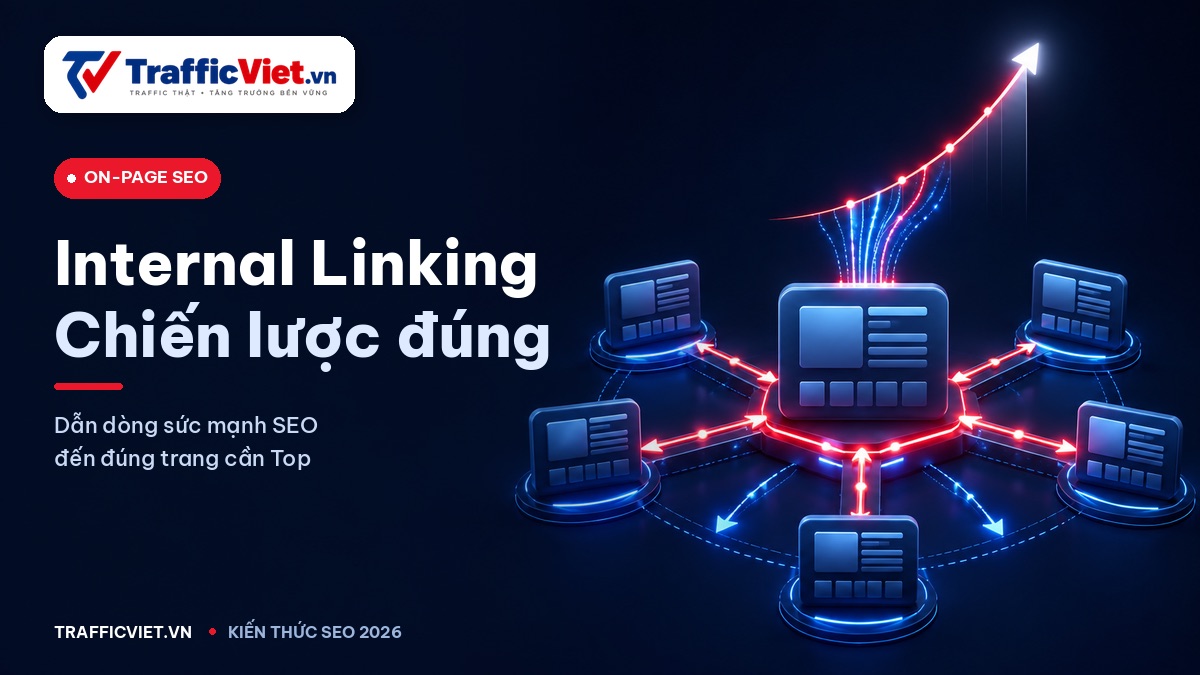
1 hub page (chủ đề lớn) + nhiều spoke pages (chủ đề con) liên kết với hub.
Ưu: rõ topic authority, ideal cho content marketing Nhược: cần structure content kỹ trước
3. Silo Structure
Phân chia site thành "silo" theo chủ đề. Trong mỗi silo, các page link với nhau. Giữa silo ít/không link.
Ưu: cực mạnh cho topical authority Nhược: rigid, khó duy trì khi content phát triển
4. Pyramid / Hierarchical
Homepage → Category → Sub-category → Detail page
Ưu: tự nhiên, dễ navigate cho user Nhược: PageRank tập trung vào top, deep pages yếu
5. Mesh / Hybrid
Combine 2-3 mô hình trên tùy theo type content.
Ưu: linh hoạt, phù hợp site lớn Nhược: cần plan kỹ
Khuyến nghị 2026: Hub-and-Spoke + Hybrid là tốt nhất cho hầu hết website.
Topic Cluster — Mô hình win nhất 2026
Cấu trúc
HUB PAGE: "Hướng dẫn toàn tập Traffic User cho website"
    │
    ├── SPOKE 1: "Traffic User là gì?"
    ├── SPOKE 2: "Cần bao nhiêu traffic để lên top?"
    ├── SPOKE 3: "Traffic User vs Traffic Bot"
    ├── SPOKE 4: "Traffic User cho E-commerce"
    ├── SPOKE 5: "Traffic User cho Y tế"
    └── SPOKE 6: "Top 10 sai lầm Traffic User"
Cách build cluster
1. Identify hub topic
Topic rộng + nhiều search volume + chứa nhiều subtopic.
VD: "SEO" (quá rộng), "Traffic User" (vừa phải), "Traffic User cho E-commerce" (quá hẹp).
2. Map subtopic (spokes)
Search "Traffic User" trên Google → thấy gợi ý:
- People also ask
- Related searches
- Top 10 results outline
→ List 10-20 subtopics liên quan.
3. Create content
- Hub: bài tổng quan 4000+ words, link OUT đến mọi spoke
- Spoke: bài chi tiết 1500-3000 words, link BACK đến hub + sang spoke khác relevant
4. Internal link
- Hub → tất cả spokes
- Spokes → hub (nhiều lần trong nội dung)
- Spokes → spokes related
5. Track + iterate
- Monitor ranking từ Search Console
- Add spoke mới khi tìm thấy gap
- Update hub thường xuyên
Anchor Text — Yếu tố quan trọng số 1
Anchor text là gì?
Text hiển thị của link. Vd: <a href="/abc">đây là anchor text</a>
Tại sao quan trọng?
Google đọc anchor text để hiểu page đích nói về gì. Anchor text rich keyword = boost ranking cho từ khoá đó.
Best practices anchor text
✅ DO
- Descriptive: "hướng dẫn Traffic User" thay vì "click here"
- Keyword-rich nhưng tự nhiên
- Varied anchor cho cùng URL (exact match + partial match + branded)
- Context relevant: surrounding text liên quan
❌ DON'T
- Generic anchor: "click here", "read more", "this article"
- Exact match overuse: cùng anchor cho mọi link đến cùng URL → looks spammy
- Naked URL: paste URL trần
- Long anchor: > 60 ký tự = cluttered
Anchor text distribution lý tưởng
Cho 1 page target keyword "Traffic User":
| Anchor type | % distribution | Ví dụ |
|---|---|---|
| Branded | 30% | "Traffic Việt", "trafficviet.vn" |
| Partial match | 25% | "dịch vụ Traffic User", "Traffic User chất lượng" |
| Naked URL | 15% | "trafficviet.vn/abc" |
| Generic | 15% | "xem thêm", "tại đây" |
| Exact match | 10% | "Traffic User" |
| LSI keywords | 5% | "lượt truy cập thật", "người dùng search Google" |
10 best practices internal linking 2026
1. Link from high-PR to low-PR pages
Page mới yếu cần "PageRank boost" từ page mạnh (homepage, popular blog post).
2. Use descriptive anchor text
Không dùng "click here". Dùng từ khoá relevant + tự nhiên.
3. Link to deep pages, not just homepage
Deep page (sản phẩm cụ thể, blog post) cần internal link nhất.
4. Avoid link to broken pages (404)
Audit định kỳ với Screaming Frog. Fix broken internal link ngay.
5. Use breadcrumb navigation
Breadcrumb tạo internal link tự nhiên + giúp Google hiểu hierarchy.
6. Limit internal links per page (< 100)
Google said "no penalty" nhưng > 100 link = diluted PageRank, hard to crawl.
7. Use natural anchor in body content
Link trong content body có giá trị hơn link trong footer/sidebar (Google biết content link more contextual).
8. Link to related, not random
Link sang page thực sự relevant. Random link reduce user trust + Google's understanding.
9. Update old posts with new internal links
Khi publish bài mới, đi tìm 5-10 bài cũ relevant để link sang bài mới.
10. Track + measure
Use Ahrefs Internal Links report hoặc Screaming Frog để map internal link structure.
Internal Linking cho từng loại website
Blog / Content site
- Hub-spoke cluster approach
- "Related posts" widget cuối bài
- Link in-content 3-5 lần/bài
E-commerce
- Category → Subcategory → Product
- "Customers also viewed" widget
- "Frequently bought together"
- Blog → Product (cross-link)
SaaS
- Homepage → Features → Use cases
- Pricing page link to multiple features
- Blog → Documentation cross-link
- Customer stories → relevant features
Local business
- Homepage → Services list → Service detail + Location
- Each location page → all services
- Blog → Service pages
News site
- Article → tag pages
- Article → category pages
- "Related articles" theo topic
- Author page → all articles
Common mistakes
1. Orphan pages (no internal links)
Page không có internal link → Google khó discover + đánh giá thấp.
Fix: audit Screaming Frog → "Pages with 0 internal links"
2. Too many footer links
Footer link có giá trị thấp hơn body link. Tránh footer 50+ links.
3. Sidebar over-stuffed
Sidebar "popular posts", "categories", "tags"... có thể tạo > 100 internal links per page.
4. Same anchor for different URLs
Confusing Google. Vary anchor cho different URLs.
5. Link only from homepage
PageRank stuck ở top. Deep pages chết.
6. No internal link to new content
Publish bài mới mà không link từ bài cũ → bài mới mất 6-12 tháng để rank.
7. Broken internal links
Cause crawl errors + lose PageRank.
8. NoFollow internal links
NoFollow để "sculpt" PageRank không còn hiệu quả (Google đã update). Dùng follow cho mọi internal link.
Tools
Audit
- Screaming Frog (free 500 URLs, paid more)
- Sitebulb (visual sitemap)
- Ahrefs Internal Links report
- Search Console → Links → Internal links
Implementation
- WordPress: Link Whisper, Internal Link Juicer
- Manual: spreadsheet planning
Visualization
- Gephi (network graph)
- Screaming Frog Visualizations
Internal Linking + Traffic User
Traffic User chạy traffic vào landing pages. Internal linking giúp distribute traffic sang related pages:
- User landing page A (từ Traffic User)
- A có internal link sang B, C, D
- User click → dwell time tăng → multiple pages get benefit
Combo win: Traffic User → Hub page → user explore spokes → toàn cluster lên hạng.
Kết luận
Internal linking là leverage cao + chi phí thấp trong SEO. Đầu tư 2-3 ngày setup topic cluster + audit định kỳ = boost ranking dài hạn.
Liên hệ Traffic Việt qua 039 309 1996 để được tư vấn topic cluster + Traffic User strategy phù hợp với content của bạn.